
































How to Measure Trust on Your Website

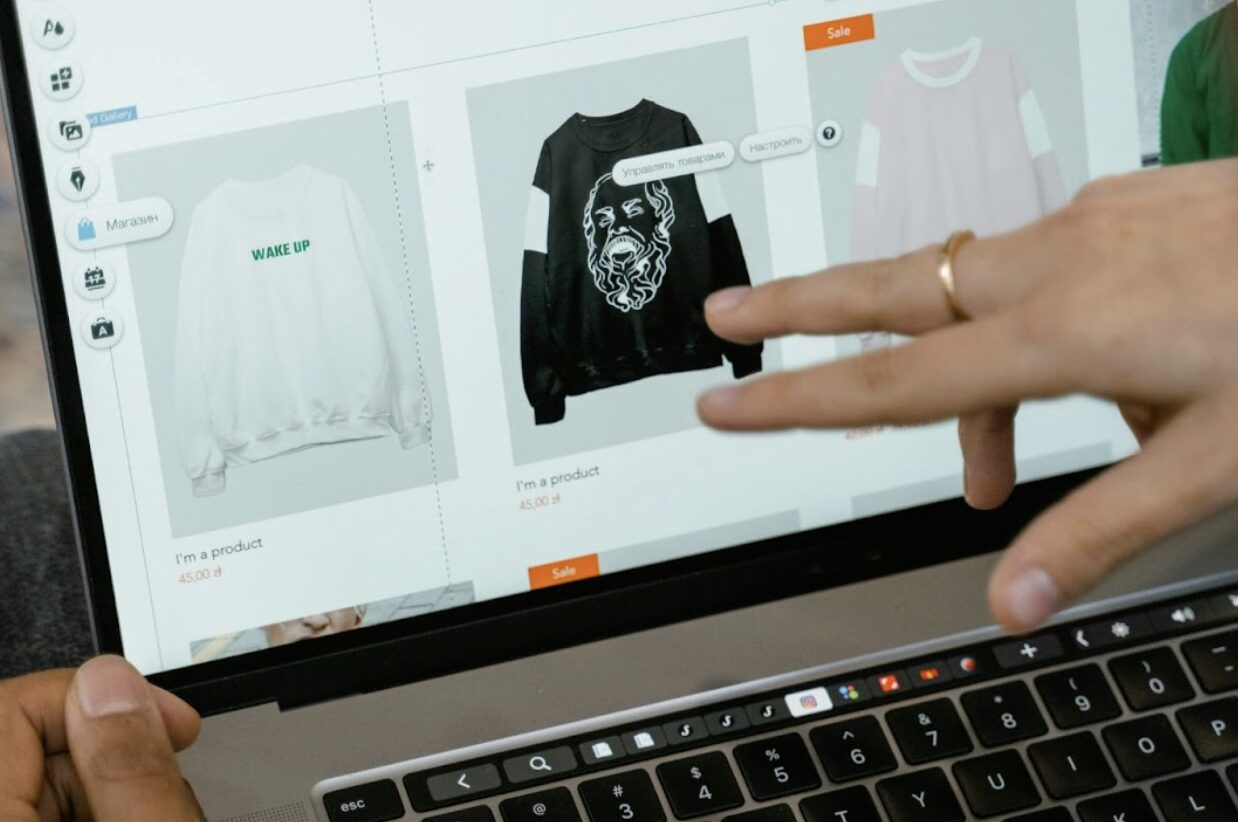
Web designer typing on a keyboard

How to Measure Trust on Your Website Trust is rarely discussed in performance reports. It doesn’t sit neatly inside Google Analytics dashboards, and it isn’t as obvious as traffic, impressions or conversion rates. Yet for marketers and business owners, trust is often the hidden factor behind whether a website generates enquiries or quietly loses them. … Read more

Before you redesign: 4 questions to ask about performance

Redesigning your website can feel like the answer to every digital problem: slow load times, high bounce rates, low conversions.  But a full redesign is a big investment.  Before you commit, it’s worth asking: Do you really need a redesign or can you improve performance without starting from scratch? Here are four key questions to … Read more

Clarity before creativity: Why should strategy come first?

Businesses often leap straight into the creative process in order to stand out, without first anchoring their ideas in a clear, strategic foundation.  While creativity can capture attention, only strategy can hold it and turn it into action. Here’s why clarity must come before creativity: Creativity without strategy is just noise It’s easy to get … Read more

How to align marketing & leadership around website goals

When it comes to website projects, we see the misalignment between leadership and marketing as one of the biggest (and most costly) hurdles to get over.  Leadership teams & stakeholders often have a clear vision of where the business is headed, but marketing teams are left to interpret that vision, sometimes without the clarity or … Read more

Why aren’t your website analytics telling you the full story?

If you’re running a business or work in marketing, chances are you’ve spent time poring over your website analytics, tracking page views, bounce rates, session durations and more.  And while those numbers might seem like clear indicators of how your website is performing, they only reveal part of the picture. Surface-level metrics can be dangerously … Read more

How does website design influence buyer trust in seconds?

Imagine landing on a website for the first time. Within just 0.05 seconds, you’ve already formed an impression, often before reading a single word.  That’s how fast design influences perception. Attention spans are short and options are endless, so your website’s design can be the make-or-break factor for earning buyer trust. First impressions are (mostly) … Read more

The hidden cost of skipping strategy in digital projects

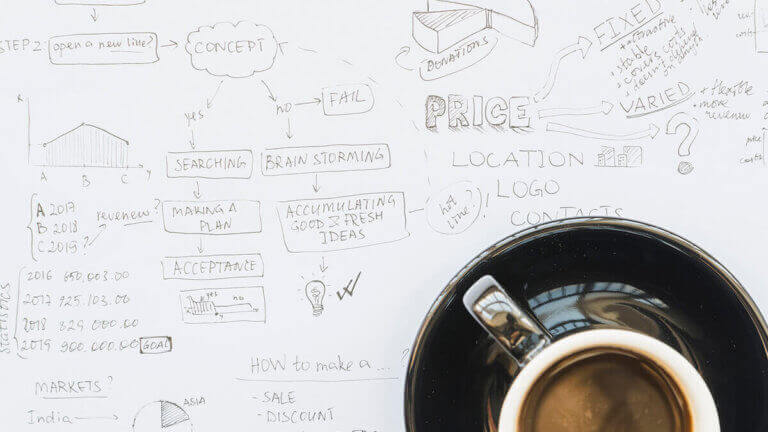
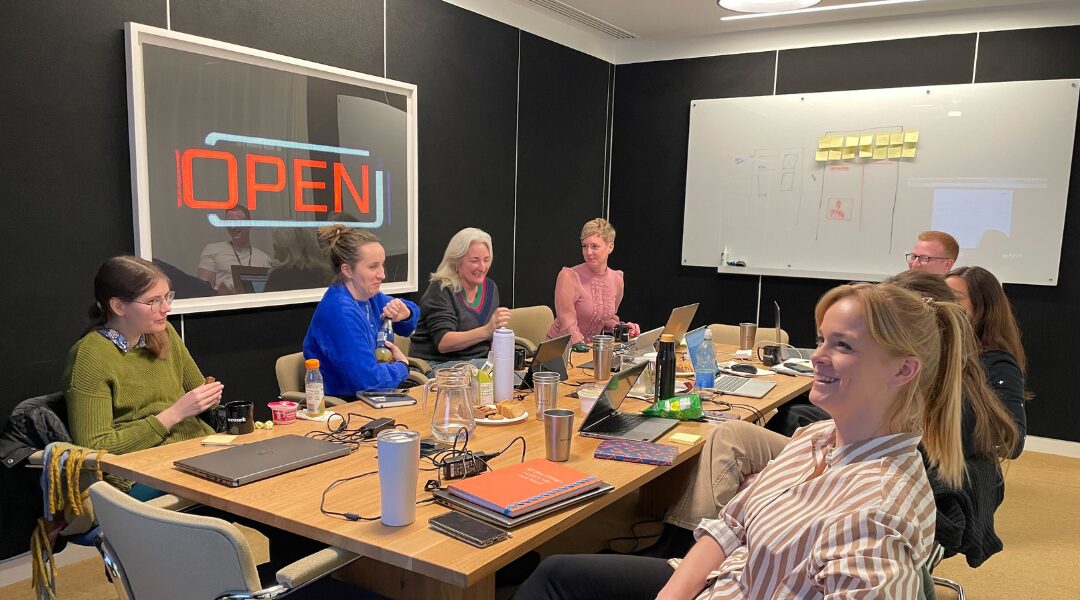
A room full of marketers during a strategy workshop

It’s tempting to jump straight into building. Whether it’s a new website or marketing campaign, the pressure to get it done yesterday often leads teams to skip the most critical step: strategy. But what happens when you rush in without a clear plan? You might think you’re saving time and money, but in reality, you’re … Read more

What is a website growth roadmap? (+ why you need one)

So many businesses treat their website like a patchwork project: a quick fix here, a new plugin there.  Without a clear strategy, it’s so easy to get stuck in a cycle of reactive updates and missed opportunities. That’s where a website growth roadmap comes in. What is a website growth roadmap? A website growth roadmap … Read more

5 signs it’s time for a full website redesign

If your website feels outdated, confusing or clunky, imagine what sort of first impression this could be making. It could be costing you leads, conversions and credibility. Many businesses fall into the trap of applying temporary fixes, tweaking colours, shifting buttons and updating content, without stepping back to see the bigger picture.  If you’re constantly … Read more

From confusion to clarity: The power of a one-day strategy workshop

Let’s face it, marketing teams are stretched thin.  The pressure to perform is constant, the tactics are endless and the to-do list only ever grows. I’m sure you can relate. From brand messaging and audience targeting to campaign execution and ongoing analytics, it’s easy to feel like you’re running in circles rather than moving forward. … Read more

From traffic to leads: How SEO & CRO work together to drive results

You’ve done the work to get traffic. You’re ranking on page one. Your analytics show a steady stream of visitors.  So… why aren’t the leads flowing in? If you’re seeing high traffic but low conversions, you’re not alone. It’s one of the most common and frustrating challenges we see within marketing teams. The good news? … Read more

Why your website needs more than just a fresh coat of paint 

Because polish without purpose won’t deliver results. We’ve all heard the phrase: “Our website just needs a fresh, new look.”  And sure, on the surface, a slick redesign sounds like a win. It feels proactive. Clean. “Modern.”  But here’s the reality: visual updates without deeper strategy are a short-term fix. At best, you impress people … Read more

How strategy workshops drive marketing team alignment

Misalignment in marketing isn’t just frustrating, it’s costly.  Teams pulled in different directions, unclear priorities & inconsistent messaging can derail even the best campaigns.  That’s where a strategy workshop comes in, not as a nice-to-have, but as a critical tool for building clarity, cohesion & momentum across the marketing function. Here’s how a strategy workshop … Read more

Why your website isn’t converting (+ how to fix it without a full redesign)

Let’s be honest, there’s nothing more frustrating than pouring time, money & effort into your website only to see… tumbleweeds.  Visitors are coming, but they’re not buying, booking, signing up or doing much of anything.  And while everyone tells you a “full redesign” is the answer, your budget (& your sanity) says otherwise. Here’s the … Read more

Is your website confusing customers? Here’s how to tell

If your website is confusing, your customers won’t stick around.  A frustrating user experience leads to lost sales, high bounce rates and a tarnished brand reputation. But how do you know if your website is causing more confusion than conversions?  Here are some common signs and practical ways to fix them: #1 High bounce rates … Read more

Overcoming stakeholder objections: How to get buy-in for your website project

Launching or revamping a website is a major investment, we know how hard it is to get stakeholders on board & make them see why it’s a worthwhile investment.  Competing priorities, risk aversion & scepticism about ROI can stall progress before the project even gets off the ground, sometimes it’s the hardest part of the … Read more

5 signs your website is holding your marketing success back

Your website is the digital face of your business, but is it working for you, or against you?  Many businesses invest heavily in marketing but fail to see results because their website isn’t set up for success.  If you’re struggling to generate leads, convert visitors or keep up with competitors, your website might be the … Read more

The true cost of a website that doesn’t feel like you

Your website is often the first interaction potential customers have with your brand.  But what happens when that first impression doesn’t reflect who you truly are?  A misaligned website is a website that fails to capture your brand’s identity, voice & values. And this can cost you more than you realise. Here are the hidden … Read more

Unlock decision-maker buy-in with our No Brainer Business Case

Are you struggling to get decision-makers & stakeholders on board with your project?  Whether you’re proposing a website redesign, strategy workshop or rebranding initiative, securing buy-in can be one of the biggest hurdles.  The real challenge isn’t proving your project’s necessity, it’s articulating its value in a way that resonates with stakeholders. ➡️ Introducing the … Read more

Why most website redesigns fail without a clear strategy

A website redesign is an exciting opportunity to revamp your brand’s online presence, improve user experience & drive business growth.  However, so many redesign projects fail to deliver results, not because of poor design or technical execution, but due to a lack of clear strategy.  Without a solid foundation, your business could find itself with … Read more

How small changes deliver BIG results: The power of incremental optimisation

Businesses often chase large-scale redesigns to improve their website’s performance.  But what if I told you the most effective way to achieve sustainable growth is through a series of small, targeted optimisations rather than a complete overhaul? At Squibble, we believe in the power of incremental optimisation.  By making strategic, data-driven changes over time, we … Read more

Why is my website navigation costing me customers?

Your website may look great but if visitors can’t find what they need quickly & effortlessly, they’ll leave.  Poor website navigation frustrates users, increases bounce rates & hurts conversions.  If your navigation isn’t optimised, you could lose valuable customers without realising it. The cost of poor website navigation #1 Frustrated users leave quickly Users expect … Read more

5 signs your website strategy needs a revamp

Your website is more than just your virtual storefront, it’s the heart of your online presence and a critical touchpoint for your audience.  And even the best websites can become messy, outdated or misaligned with business goals over time.  Recognising the signs your website strategy needs a revamp is the first step toward reclaiming its … Read more

The sweet spot: why smaller web design agencies outshine freelancers & bigger agencies

Choosing the right partner is important when taking on the huge project of redesigning & rebuilding your brand’s website.  The decision usually boils down to three options: hiring a freelancer, a smaller web design agency or a big agency.  While each has its advantages, the sweet spot lies in choosing a smaller web design agency, … Read more

It’s all buzzwords without the substance

I’m sure you hear agencies throwing around complex jargon, buzzwords & overly technical explanations that sound more like a foreign language than anything helpful. Terms like “API integration,” “responsive framework” & “cross-platform optimisation” can leave you feeling overwhelmed & confused. While web design agencies may see this as a way to assert their expertise, it … Read more

Balancing marketing fundamentals with innovation

The debate between old-school fundamentals & new-age innovation in marketing has never been more relevant.  And the challenge is clear: how do you stay ahead of the curve while preserving your brand’s core identity?  Let’s dive into how to strike the perfect balance between leveraging marketing trends & sticking to time-tested principles, ensuring that innovation … Read more

Overwhelmed by the tech side of your website?

We all know how important a really good website is for your website. However, creating and maintaining a website involves more than just an eye-catching design. The technical aspects like coding, hosting, security & SEO are usually a tad overwhelming especially if your expertise lies in marketing. Let’s dive into how you can manage the … Read more

Need more from your web design agency than just delivery?

Your brand’s website isn’t just a shop window these days, it’s an extension of your brand’s entire identity.  And, at Squibble, we believe the web design agency that builds & maintains your website should be more than just a service provider, they should be a strategic partner invested in your success.  Unfortunately, too many businesses … Read more

Founder of Birmingham Marketing Agency Named Among UK’s Most Influential in Digital and Technology

BIMA100 Squibble Kim Leary

Kim Leary, the founder of Squibble, a creative design agency based on Colmore Row in Birmingham, has been recognised as one of the 100 most influential people in the UK’s digital industry. This accolade was awarded by the British Interactive Media Association (BIMA), a leading organisation representing the tech and creative sectors in the UK. … Read more

How Do I Show ROI on a New Website?

ROI Web Design

How Do I Show ROI on a New Website? When businesses invest in a new website, they need to see a return on that investment (ROI). ROI measures the profitability of an investment. In the context of websites, it refers to the value that a business gains from the money spent on creating and maintaining … Read more

The Essential Checklist for a Website Refresh

the essential checklist for a website refresh (1)

The Essential Checklist for a Website Refresh Refreshing your website is a vital activity that ensures your online presence remains effective, engaging, and in line with the latest technological advancements and user expectations. A well-executed website refresh can improve site performance, enhance user experience, boost SEO rankings, and safeguard against security threats. This process thoroughly … Read more

UI/UX Strategies to Increase Website Conversions

mapping out a user journey

UI/UX Strategies to Increase Website Conversions Leveraging First Impressions and Building Trust on your website When a user lands on your website, a critical countdown begins, setting the stage for their initial impression. This brief yet pivotal moment can determine whether they decide to engage further or leave, never to return. The design choices you … Read more

Transforming your B2B website into a conversion powerhouse in 8 steps

Design ideas on a page

Our comprehensive guide for Marketers so you can increase your conversions. Let’s embark on a transformative journey together, where you take the reins and unlock your website’s full potential. We’re here to guide you, but the power to turn your website into a beacon that leads your business towards unparalleled growth is in your hands. … Read more

3 simple steps to navigate the blending of marketing & design roles

canva

Over the past few years, we’ve seen the boundaries blurring between marketing roles & design roles. More & more we’re seeing designers, traditionally tasked with bringing creative visions to life, now being pressured to measure their work’s ROI. Meanwhile, marketers are turning to DIY design tools like Canva or Adobe Express, blurring the line between … Read more

What Are Brand Guidelines?

What Are Brand Guidelines? A Comprehensive Guide to Crafting and Implementing Brand Consistency. In today’s fierce business landscape, consistent branding is paramount for success. This definitive guide unravels brand guidelines’ intricacies and central importance, serving as your steadfast compass in a world oversaturated with competing messages. These guidelines are the backbone of your brand’s public … Read more

Crafting a compelling value proposition

Crafting a compelling value proposition Words like ‘innovation’ and ‘differentiation’ are often thrown around. But at the core of these ideas that’s where the concept of the value proposition comes into play. It’s the promise of the value your product or service will deliver to customers. Essentially, it’s the primary reason a customer should buy … Read more

The Importance of UI & UX in B2B Sales

Oh, the glitzy world of B2B sales! Every detail matters, and guess what’s at the forefront? Yup, the design and user-friendliness of digital platforms. Dive into this digital rabbit hole and discover why an ace User Interface (UI) and a slick User Experience (UX) can be your sales magic wand. 1. UI and UX: The … Read more

B2B Logo Design: Crafting A Powerful Brand Identity for Success

In the complex maze of the contemporary B2B marketplace, establishing a unique presence is imperative. A remarkable logo acts as a brand’s beacon, drawing attention and aiding retention. It’s been shown that individuals form a first impression of a logo in a mere 10 seconds. Furthermore, a logo often requires 5-7 distinct impressions to be … Read more

An eCommerce Website Launch Checklist for Online Success

Ready to take the leap into the online marketplace? Setting up an eCommerce website is your gateway to the vast world of digital retailing. A well-tailored website paves the way for attracting and retaining customers and lays the groundwork for achieving business success. A successful eCommerce venture requires thorough preparation, intricate design, secure operations, and … Read more

Free Brand Strategy Toolkit: Empowering Your Brand for Success

Welcome to the Free Brand Strategy Toolkit: an essential resource designed to empower your brand for success. In this comprehensive toolkit, you’ll find everything you need to develop a strong brand strategy that will shape the direction and perception of your brand, leading to increased business success. Let’s explore the key components and features of … Read more

The Importance of Branding: Building a Strong Identity and Competitive Advantage

A clear-cut brand strategy is vital for success. It acts as the driving force shaping every facet of your business, from pivotal decisions to how customers perceive you. This article dives into the essentials of devising an efficient brand strategy, offering keen insights and advice to lay a robust foundation for enduring success. Understanding Brand … Read more

The Squibble Rebrand Checklist: A Step-by-Step Guide to a Successful Brand Transformation

Welcome to the Squibble Rebrand Checklist, a comprehensive guide to help you navigate through the process of a successful brand transformation. In this guide, we’ll provide you with a systematic approach to ensure a smooth and effective rebranding process. I. Assessing the Need for a Rebrand Before diving into a rebrand, it’s crucial to assess … Read more

Successfully Launching a Rebrand: Strategies for a Smooth Transition

Rebranding has emerged as a vital strategy for companies aiming to stay relevant and seize fresh opportunities. A rebrand marks a significant shift in a company’s journey. It presents a chance to reshape its identity, values, and market stance. However, an effective rebrand involves more than merely introducing a new logo or visual theme. It … Read more

The Core Principles of a Rebrand: Revitalising Your Brand for Success

The definition and importance of a rebrand must be balanced. A rebranding effort involves reshaping and repositioning your brand to adapt to changing market dynamics and ensure longevity. Staying relevant and competitive in the market is crucial for sustained success and growth. I. Understanding the Need for a Rebrand Recognising the Signals for a Rebrand … Read more

How to Conduct a Brand Audit: A Comprehensive Guide for Businesses

Understanding the Importance of a Brand Audit In today’s competitive business landscape, a strong and well-defined brand is crucial for success. However, as market trends and consumer preferences evolve, it’s essential for businesses to periodically evaluate and fine-tune their brand strategies. This is where a brand audit comes into play. A brand audit is a … Read more

How to Measure the Success of Your Rebrand

A rebrand can be a tricky beast to navigate. When done correctly, it can make a big difference in your sales, brand awareness and so much more, but tracking and measuring the true impact of a rebranding project can be a difficult task in itself. In this guide, we give you all the information on … Read more

User Experience vs User Interface

User Experience vs User Interface Dropping the terms UX or UI into a casual conversation is a surefire way to stop it in its tracks, but if you’re a business owner, you ignore these two design principals at your peril. User experience (UX) and user interface (UI) design are critical components of successful digital product … Read more

How to Build Brand Consistency into Your Digital Design

From managing budgets to researching competitors, marketing managers do it all. With so much on your plate, it’s easy to forget the basics, but brand consistency should never be overlooked. 

According to the 2022 Consumer Research Report, companies with established brand consistency could expect customers to pay a whopping 46% more for a brand they trust. This trend is growing exponentially because they also report that the stat has increased from 30% in 2021. Sounds like a ride most marketing managers would want to get on!

Revisiting the brand consistency in your website design will save you a lot of time and headaches down the road. Not only will it make your brand more recognizable and trustworthy, but it will also boost your long-term sales and strengthen your pricing power

Read on for essential tips on how to build brand consistency into your current website design.
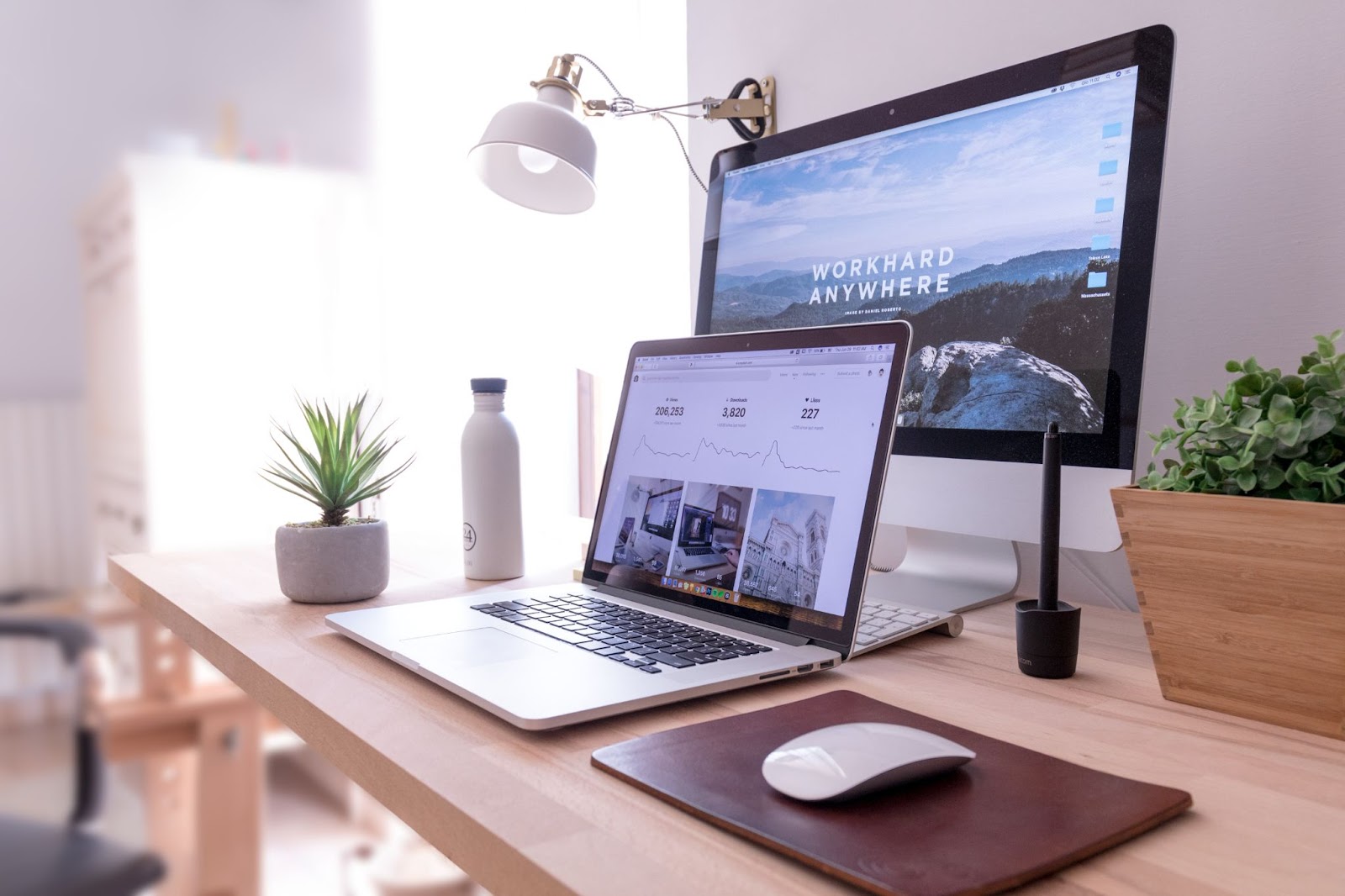
A desktop computer with a web page is sitting on a wooden desk. In front of the larger screen sits a smaller laptop, with its screen depicting another web page from the same website, illustrating the use of consistent branding and colors for websites.

Photo byDomenico Loia onUnsplash

What is Brand Consistency?

We throw the words “brand consistency” around like they’re going out of style, but what do they really mean? At its simplest, brand consistency ensures that your company’s visual identity is applied consistently across all touchpoints. This includes (but is not limited to) your website, social media channels, marketing collateral, and even physical products.

When done right, brand consistency creates a cohesive experience for your customers and helps them quickly understand your product, service, and message. It also makes life as a business owner or brand manager much easier because you don’t have to constantly reinvent the wheel whenever you create new marketing collateral.

Benefits of Brand Consistency

As a business looking to scale, it’s essential to have consistent branding across all platforms. Your customers should be able to identify your company no matter where they see your name or logo. Brand consistency helps build trust and recognition, leading to more sales and loyal customers. In fact, companies that focus on brand consistency can increase their profits by up to 20%!

Below are other benefits you’ll experience when focusing on your brand consistency.

Booking a Branding Discovery Call


Book Now

First impressions matter

First-time visitors to your website will make snap judgments about your company based on your design. If your plan is consistent with your brand, visitors will get a positive first impression that will motivate them to stay on your site and learn more about your company. 

Brand recognition

A consistent design across all of your digital channels will help build recognition for your brand. Visitors who see a consistent strategy will be able to remember and recognize your brand in the future.

Trust and credibility

A consistent design conveys to potential customers that you’re a credible and trustworthy company.

Higher conversion rates

With increased name recognition comes increased conversion rates – that is, leads who are familiar with your brand are more likely to do business with you.

Reduced marketing costs

A consistent design means less time and money spent on marketing and advertising initiatives and less on rebranding or redesigns down the road.
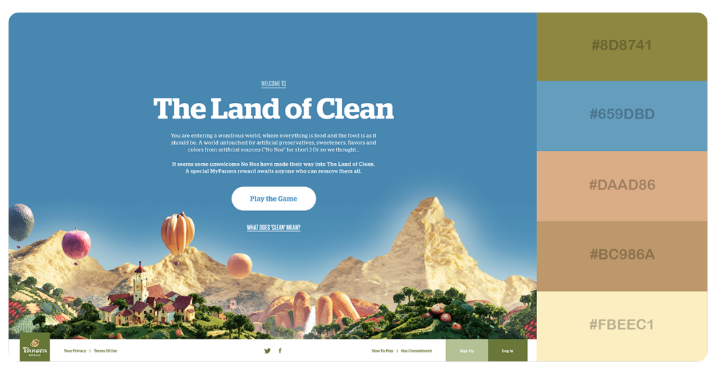
Photo depicts a mountainous scene with a quaint village and a beautiful blue sky. The colors are in muted earth tones and there are colorful hot air balloons rising into the sky.

This a perfect example of using natural, grounded colors to complement the image and purpose of the brand. Photo courtesy of Visme.co

The Importance of Color in Visual Brand Consistency

One of the pivotal aspects of building brand consistency is using colors that represent your company in a positive light. Colors can grab attention, create an emotional response, and even convey information. When choosing colors for a website re-design or new app, consider the message you want to send your users.

One way to ensure consistency is to utilize color theory in your digital platforms. Color theory studies how colors interact with each other and can be used to create a cohesive color palette for your site. 

Check out these tips on using color theory to create a consistent brand identity when re-branding or reassessing your current site design.

Pick a color scheme that represents your brand

Your color palette should be representative of your brand identity. If you want your site to feel warm and welcoming, use colors like red, orange, and yellow. For a more modern look, go with cool colors like blue and green. You can also use neutrals like black, white, and gray to create a versatile palette that can be used for any type of design. 

Use your colors consistently throughout your site

Once you’ve chosen your colors, use them consistently throughout your site. This means using the same colors for links, buttons, and other elements. If you want to add some variation, try experimenting with shading and hues of your primary color or create a contrasting color scheme.

Make sure your colors are legible

When it comes to digital design, legibility is key. You need your audience to be able to read the text on your website easily, and that means using colors that provide good contrast. Try reading the text on your website with different color combinations to see which is easiest on the eyes.
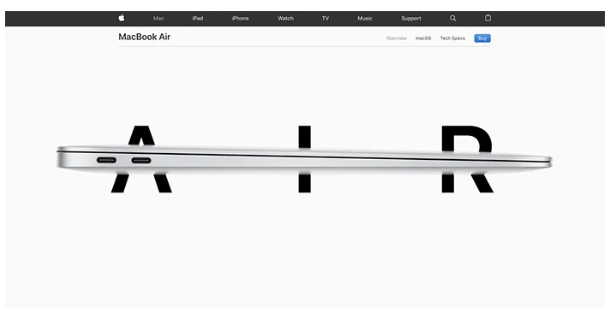
A white screen has the word AIR written across it in bold black letters. A MacBook Air computer has been horizontally placed across the letters, cutting them in half and becoming the middle bar in the A, demonstrating how to effectively use whitespace and still get the message across about the product being light and compact.

A unique and creative example of how to effectively use whitespace from Apple. Photo courtesy of impactplus.com.

Embrace Whitespace

With the market as volatile as it is, marketing managers have to move fast and embrace change. But when it comes to design, there’s one thing you need to be consistent about: whitespace. Whitespace is the empty space around elements on a page. It’s an integral part of any design but often overlooked because it contains no “content.”

However, whitespace is crucial for creating your designs’ clean, modern look. It also makes your content easier to consume; in fact, studies have shown that when people are given too much information at once, they tend to feel overwhelmed and have difficulty processing it all. 

This is where whitespace comes in to help you create a more cohesive design. You can help reduce eye strain and improve attention spans by including plenty of whitespace in your digital designs. 

So how do you go about incorporating whitespace into your designs? Here are a few tips: 

  • Use margins and padding to create whitespace around elements 

  • Group related elements together with negative space in between 

  • Use empty space to break up long blocks of text 

  • Use whitespace to highlight important elements 

Keep your designs clean and uncluttered by following these tips, and it will help you create digital designs that are both visually appealing and easy to navigate.

What the Font?

Established businesses must continuously evolve in order to keep up with their competitors, which keeps the marketing team on its toes. One crucial but often overlooked aspect is font choice in web design. Your website is usually the initial interaction potential customers have with your company, so the content needs to look great and be easy to understand.

So, when was the last time you took a good, hard look at the font on your website? When you do, you want to ensure the font is legible and easy to read. Next, the font should be appropriate for the tone of your website. And lastly, the font should be consistent with the rest of your branding. 

Here are a few tips for choosing new fonts that will help build brand consistency into your digital design:

  • Use two or three fonts max. Your web design should use two or three fonts at the most. This will help create a consistent look and feel across your website, making it appear more professional. Too many fonts can make your site look cluttered and unprofessional. 

  • Use easy-to-read fonts. The fonts you use on your website should be easy to read, which is especially important for body text. You want people to read your content easily without straining their eyes. 

  • Stick to common fonts. There are thousands of fonts, but you should stick to standard fonts pre-installed on most computers. This will ensure that your website looks the same for everyone who visits it. 

  • Use font sizes that don’t cause eyestrain. The font size you use on your website should be large enough to be easily readable (without needing to grab bifocals). Body text should be around 16px or larger. Headings can be a bit smaller but still need to be legible.

Your font choice says a lot about your brand and should convey the tone of your business. For example, a playful font might not be appropriate for a law firm or a funeral home. Also, you might be tempted to choose a custom font, but using a widely available font ensures that your site will render correctly for everyone who visits it.
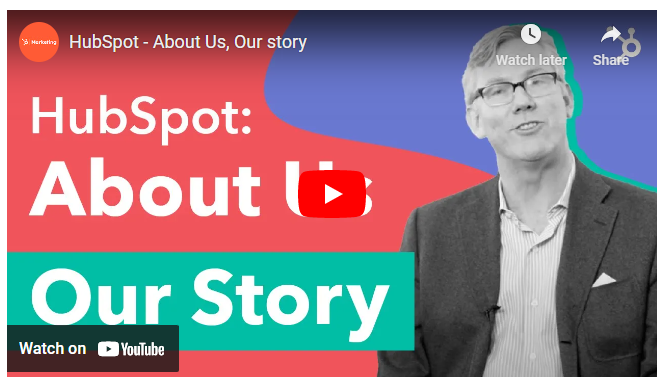
 

Pictures is a YouTube Thumbnail depicting a red background with white block writing saying "HubSpot: About Us, Our Story." There is an older gentleman wearing a brown jacket on the right side of the frame.Video is a great way to share your story and get personal with your customers. Picture courtesy of HubSpot.com.

Make it Personal

Your customers want to know the face behind your name. When they feel they have a personal connection to you, they are likelier to remain loyal to your brand. So don’t be afraid to show some personality on your website! 

A mission statement is a great starting point to introduce yourself to customers, but keep it brief, to the point, and focused on what you can do for them. Does your company have a mission statement? 

If you do, when was the last time you revisited it? Goals change over time, and people come and go. It’s your job as a marketing manager always to update the company image to better connect with your customers.

There are many ways you can then express your core values to your customers on your website, including: 

  • Using first-person pronouns such as “we” or “our” 

  • Including a personalized message from the founder on the homepage 

  • Engagingly telling your brand story throughout the site 

  • Featuring customer testimonials and case studies prominently 

All these elements will help give your website visitors a sense of what it would be like to do business with you. If they can see themselves reflected in your brand, they’re more likely to become customers. 
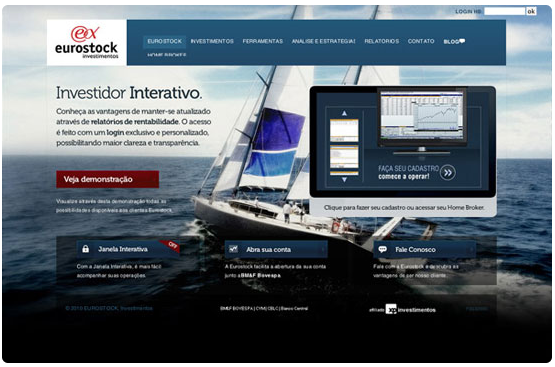
A webpage for Eurostock investment business is covered with a background of a blue-grey sea and grey sky. There is a luxury sailboat sailing on the sea in the middle of the screen. Widgets discussing the features of the business are spaced throughout the page.

Not only does the picture fit the brand colors, but the image of the luxury sailboat shows the lifestyle you can attain by using their service. Image courtesy of webfx.com.

A Picture is Worth a Thousand Words in Digital Design

Images are great for grabbing attention and making your content visually appealing. But they can also emphasize your message and help users understand your brand. Do the pictures on your site reflect the current state of your brand, or are they outdated? 

Use imagery consistent with your brand’s style and messaging, and be sure to use alt text to describe the image for users who cannot see it. It goes without saying you should always use high-quality, professional-looking images to create a positive impression of your brand.

Don’t be afraid to experiment, either. Using just the right image in your backgrounds, headers and footers can give more appeal to your website design by adding an element of fun or playfulness, reinforcing the mood you want to create, or enhancing the professionalism of your design.

Putting Your Logo in the Right Place

A company logo is one of any business’s most important branding tools. It is the first thing customers will see when encountering your brand, and it should visually represent what your company represents. A strong logo will help customers remember your brand, and it can help to build brand recognition and loyalty.

When it comes to website design, where you put your logo is as important as having a logo in the first place. Your logo is the face of your brand and needs to be front and center on your website. Why? Because people need to know who they’re doing business with. 

Think about it this way: when you see a familiar logo, you instantly associate positively with that company. But if you need help finding the logo, or it’s hidden in the footer, you might not trust the company as much. That’s why it’s essential to have a consistent logo placement on your website. 

This is especially important for websites with a lot of page content. If your visitors have to scroll down to see your logo, they might not even notice it.

The top left corner of your site is optimal for your logo because it’s the first thing people see when they visit your site. People tend to scan websites in an “F” pattern, so their eyes will likely first hit that top left corner. If your logo appears in another area, there is a chance visitors could miss it entirely.

When it comes to user-friendliness, it also makes sense to group your logo and the navigation bar together simply to make everything accessible and easy to spot for your customers.

Focus on Consistency for Success

 The takeaway for marketers and businesses looking to scale is clear: building brand consistency is critical to success. By aligning your website with your overall branding or re-branding strategy, you can create a cohesive experience that resonates with your target audience and sets you apart from the competition. So what are you waiting for? Incorporate brand consistency into your marketing strategy today!


 

How to talk to multiple target audiences

BIG or small, traditional and stuffy or bold and exciting; clients can come in all shapes and sizes, especially in b2b marketing. It’s unlikely you’re targeting one singular persona. I’m definitely envious if you are! So how do you appeal to them both? At Squibble we target small and large companies, up to 1 million or up … Read more

The Importance Of Your Logo

Whether you’re starting a business or have an existing business, your logo is your opportunity to create an instant and lasting impression that will resonate with your potential customers.  Whilst it’s not so easy to measure the overall impact of your logo it is important that you make sure that your logo tells the right … Read more

Mobile First Design: What Is It & Why Is It Important?

With over 50% of website traffic coming from mobile devices, it’s no surprise that businesses are beginning to put more emphasis on the mobile design of their websites. Users want to easily access information at their fingertips, that’s easy to digest, clear on the next steps and simple to convert.  This means that mobile designs … Read more

3 Reasons Why Most Web Designs Fail

man-holding-ipad

If You’re Investing in a Website, Make It Work Hard for You If you’ve put money into a website, surely you’d want it to perform at its absolute best?Too often though, businesses treat their site like a box to tick. “Nobody really looks at it,” they say. But here’s the thing: your website is not … Read more

Which Web Language Is Right For Your Business?

web-language

Forgive us: we might get a bit techy in this one. Imagine you’re in one of those scenes from Star Trek where Spock gets all logical. That’s us, right now – because web languages really do matter, even if they seem a bit esoteric to most of us. A web language is the code your … Read more

Do Websites Need Maintenance?

web-maintenance

Building and launching a website is a huge achievement for any business. But it’s also the start of something – an ongoing relationship with a new digital asset, and one which requires constantly attention. Few things can survive unscathed without some TLC every now and then: we clear our cars, dust our houses, update our … Read more

What Makes A Bad Website Design?

bad-website-design

Bad website design is confused web design – and we all know a muddled webpage when we see one. Our grandmothers might have told us that, if we’ve nothing nice to say, we should say nothing at all; but the truth is we can learn from the negative – it teaches us what to avoid. … Read more

How Much Should A Website Design Cost?

man-holding-card

It can feel like the most important question of all when it comes to web design: how much will it cost? Price, of course, is critical to all business decisions. The truth, though, is that websites are not so much expenses as they are investments – and how much a website should cost very much … Read more

What Is The Purpose of Rebranding?

rebranding

What Is The Purpose of Rebranding? Rebranding a business isn’t just about aesthetics; it’s a strategic decision driven by various critical needs. Firstly, a company may rebrand to update an outdated brand identity, ensuring its image reflects modern values and technologies. Secondly, as a business evolves, its original messaging may no longer align with its … Read more

What Are User Metrics?

user-metrics

User experience matters. It’s why we focus so squarely on achieving great UX design at Squibble. We’re evangelists for the approach. But one of the questions we get asked a lot – understandably – is, “How can you measure UX?” The answer is through user metrics. It’s critical that businesses are able to measure user … Read more

Why Branding Matters

why branding matters. image of logos.

Why Branding Matters Understanding why branding matters can seem like a lower-order priority. When you’re running a business or organisation, thinking about logos and colour palettes can feel like a distraction from the real work of making things happen. But branding matters because it gives your company an identity your clients can connect with. And … Read more

What Are The 5 Characteristics of A Logo?

logo-design-on-paper

Like most things of a certain type, logos share certain characteristics – or at least the good ones do. It might be true that all bad logos are bad in different ways; but the best logos each share a set of five characteristics that make them work. Understanding these basic design fundamentals when embarking on … Read more

3 Ways To Build More Trust In a Digital World

build-trust

In today’s market-place, trust is everything. As a nation though, according to the Express, almost one in five people don’t trust anyone at all! Yet the key to selling is trust. We all know and love the old cliche “people buy from people” and that’s all well and good when you’re at a sales meeting … Read more

You Should (Probably) Carry out a Brand Audit. Here’s How,

checklist

Your branding – getting to grips with what works and what doesn’t is every bit as important as analysis in other areas of your business. But don’t mistake this for an airy-fairy process of colour, design and styles. We want to be clear – a successful brand audit absolutely relies on data. If you’re thinking … Read more

How To Convert Users Into Customers Online

working-together

There’s a reason that the adjective “animated” is most often used in a positive sense: it suggests excitement and inspiration, energy and motion. To be animated is to attract attention, to have something extra or beyond the ordinary. It’s to stand out. Needless to say, businesses should be aiming to have all those qualities. You don’t need us to say that, in the online space, websites proliferate – and many fail to make their mark.

4 Signs Your Brand Needs a Refresh — Not Just a New Logo

designing-a-logo

There are so many design agencies out there that it can be difficult to know where to start. From smaller to larger, all-service to web specialists, design agencies come in many shapes and sizes. Given how important a website is to a business, choosing the right one is critical. But how should organisations choose?

How to Choose the Best Ecommerce Platform For Your Business

shopping-on-phone

Once an optional extra, ecommerce is for many businesses now the default. As online shopping and purchasing becomes ever more widespread – and increasingly trusted by customers – companies are increasingly expected to offer direct access to the products and services via online payment gateways.

Why WordPress is great for SEO

wordpress-for-seo

According to W3techs, WordPress powers 60% of all the websites (with a known content management system) on the internet. A service doesn’t reach that kind of market share on usability and good advertising alone. WordPress works, and it works well. We’re going to focus on the SEO benefits that come with using WordPress, and why … Read more

SEO and all it’s complexities

seo

Search Engines are complex machines. They sweep through millions of web pages and rank them all in order of, well, what? This summary seeks to try and explain their methods and how you can use this knowledge to improve your page ranking and optimise your site using SEO. How the search engine’s rank Search engine’s … Read more

Branding. What’s the true cost of getting it wrong?

branding-cost-of-getting-it-wrong

Branding. It’s a word that all too often gets confused with things such as a logo design, colour palettes, brochure design or, well, just plain old pretty pictures. Yet branding, in actuality, is far more than any of these single elements. Sure, it can be said to involve all of them – but at its most fundamental level, branding is what … Read more

Advanced UI Animations

UI Animations make the web experience more interesting, interactive and entertaining and with the use of modern web technologies are being used more and more.  HTML5 has meant that animations can now be easily seen across all devices and can be scaled to any screen. 

Read more

The Repetition of UI Patterns

One of the side effects of responsive design has meant that a lot of sites look similar and we are seeing repetition of UI Patterns. Responsive design isn’t solely to blame however. The huge rise of WordPress sites and the booming WordPress the me market has also contributed to it.Having a similar look and layout … Read more

Brand vs. Identity vs. Logo – What’s the difference?

branding-cost-of-getting-it-wrong

A brand or you could say branding, mainly refers to the perceived image and subsequent emotional response to a company, its products and services. Additionally, it also represents the individual conversations that customers have with each other about the company. This is called word of mouth (WOM). The Branding Journal defines a brand as: “A … Read more

Psychology of Colour in Logo Design

colour

We are all familiar with the power of colours: Colours convey messages, evoke emotions and add brilliance to everyday things. As a result, colour plays a big part in logos. A logo wants to grab your attention away from other logos, and say “look at me!”. This is communicated through the use of form and … Read more

It’s been 4 years!

celebration

4 years ago on May 14th 2010, our website went live! Our website has changed quite a bit since the first edition we launched and I can tell you it’s been a busy 4 years! I’m sure your’s has too?! Website designs have changed, styles have come in and out of fashion and techniques have improved since we … Read more

What is Good User Interface Design?

user-interface

So just what is user interface design and why is it a golden path to website success? User interface design may be seen as a customer focused approach which lends itself to ensuring that all that is done on a website is done with the customer in mind.  This may include helping website visitors to … Read more